Gas turbine, steam turbine or complete plant?
Identify the package you need before comparing MW. A turbine or engine record alone does not establish generator, controls, auxiliary equipment or balance-of-plant inclusion. Send fuel, frequency, output, duty, site and required date with the requested package scope.
Used gas and steam turbine equipment for sale
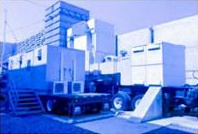
J&J's turbine records identify model, output basis, condition, frequency and included package equipment. A used gas turbine, a zero-time-since-overhaul engine, an unused package and a future refurbishment program are different offers. Compare mobile and stationary packages with the project duty before requesting a quotation.
Are you buying a turbine core, a generator package or a complete plant?
Specify the boundary before comparing MW or price. A turbine core does not establish that a generator, gearbox, controls, fuel system, auxiliaries or trailers are included. A combined-cycle or steam plant also needs a defined HRSG/boiler, steam system, balance of plant and dismantling scope. Review the actual equipment schedule for each offer.
Who sources gas and steam turbines for onsite power?
J&J Transformers LLC supplies gas and steam turbines for industrial plants, IPPs, EPCs, and data-center generation projects. Received turbine offers are now published with individual specifications and availability qualifications. Send the required MW, fuel or steam conditions, frequency, package boundary, operating-duty requirements, and project schedule for a specific equipment search. Contact Tommy Marco at 346-276-9540 or tommy@jjtransformers.com with MVA or MW, voltages, quantity, site, and need-by date. Current availability requires written reconfirmation; subject to prior sale. Final allocation and delivery terms are confirmed in writing.
Where can a data center find a gas turbine for onsite power?
Data-center owners, developers, EPCs, and procurement teams can send J&J Transformers LLC the required net site MW, quantity, fuel, frequency, duty, redundancy, emissions jurisdiction, package boundaries, site, and project timing for nationwide screening. Gas turbines can support onsite data-center generation when capacity, reliability, fuel, emissions, permitting, interconnection, maintenance, black-start, heat rejection, sound, site layout, and construction schedule align. The electrical generator, controls, auxiliaries, inlet/exhaust, emissions equipment, switchgear, and GSU must be included or purchased under a defined scope.
Published turbine MW is not automatically deliverable campus MW. Net site output changes with ambient temperature, elevation, inlet/exhaust losses, fuel, degradation, auxiliary load, emissions controls, and whether output is quoted at ISO, gross, generator-terminal, or net-plant conditions.
What turbine specifications must be confirmed before a quote?
Submit required net MW, technology/class, fuel, frequency, simple- or combined-cycle duty, ambient/altitude, emissions jurisdiction, new/surplus/used acceptance, schedule, and complete package boundaries. For offered equipment, provide model/serial, hours, starts, maintenance history, condition, location, dismantlement, and documents.
Turbine RFQ specification fields| Field | Required input | Why it matters |
|---|
| MW | Gross/net and ISO/site basis; ambient, altitude and auxiliary assumptions | Nameplate or ISO MW may overstate usable site power |
|---|
| Fuel | Natural gas composition/pressure, liquid backup or steam conditions | Output, heat rate, emissions and package equipment |
|---|
| Frequency | 50 or 60 Hz and generator/speed configuration | Do not assume a 50 Hz unit converts to 60 Hz |
|---|
| Cycle | Simple, combined, cogeneration or mechanical/industrial use | Changes HRSG/steam/BOP and efficiency scope |
|---|
| Condition | New, unused surplus, used or refurbished; hours/starts and last inspections | Determines evidence, work scope and schedule risk |
|---|
| Electrical | Included generator, MVA/PF, voltage, excitation, neutral, controls and GSU bus | A turbine prime mover is not a complete electric plant |
|---|
| Package scope | Inlet, exhaust, fuel, lube, cooling, controls, auxiliaries, emissions, black start and switchgear | Missing BOP can dominate cost/schedule |
|---|
| Lead time/origin | Location, dismantlement/loading status, need date, destination and restrictions | Availability is not delivered readiness |
|---|
How do aeroderivative and industrial-frame gas turbines differ?
Aeroderivative turbines originate from aviation-engine architectures and are packaged for stationary duty; industrial frames are heavy-duty stationary machines. Neither label determines project fit alone. Compare site output, heat rate, ramping, starts, maintenance intervals, overhaul logistics, fuel, emissions, footprint, auxiliaries, generator configuration, installed cost, and lifecycle duty.
Aeroderivative and industrial-frame comparison| Topic | Aeroderivative | Industrial frame |
|---|
| Architecture | Aviation-derived core adapted to stationary generation | Purpose-built heavy-duty stationary turbine |
|---|
| Deployment | Often packaged/modular; actual balance of plant still required | Often larger/heavier field installation; scope varies by model |
|---|
| Operation | May support cycling/ramping strategies depending on model | May suit consolidated blocks and long runs depending on model |
|---|
| Maintenance | Module exchange/overhaul approach can be relevant | Field maintenance and outage scope can be substantial |
|---|
What is the difference between simple cycle and combined cycle?
Simple cycle generates power from the gas turbine and electrical generator without a steam bottoming cycle. Combined cycle uses exhaust heat in an HRSG to produce steam for additional generation. Combined cycle can improve efficiency but adds HRSG, steam turbine, water/steam systems, cooling, controls, footprint, construction, commissioning, and operational complexity.
What information is required for a turbine and GSU package?
A GSU is matched to the electrical generator, not the turbine MW label. Provide generator MVA, power factor/reactive capability, terminal voltage, frequency, neutral and grounding, impedance target, BIL, vector/phase displacement, losses, cooling, generator circuit breaker arrangement, auxiliaries, protection, interconnection voltage, site conditions, and duty.
If the offer does not include the electrical generator, the package cannot be described as a turbine-generator set. If generator data is preliminary, the GSU should remain a budgetary interface with explicit open items rather than a falsely exact match.
How should a used or surplus turbine be evaluated?
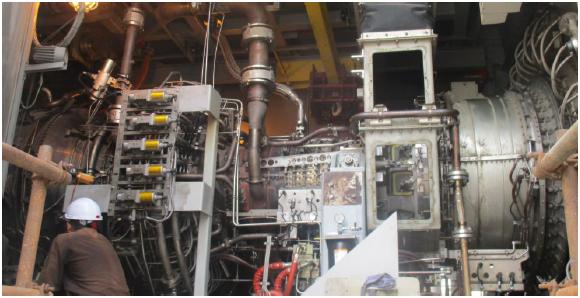
Start with identity, ownership authority, completeness, current location, preservation, and service records. Then assess hours, starts, trip/fault history, combustion and hot-gas-path records, rotor/component life, borescope and NDE evidence, controls/obsolescence, generator condition, missing systems, emissions hardware, dismantlement, loading, transport, reassembly, upgrades, tests, and OEM/service support.
- Identity: OEM, model, serials, build/modification history, frequency and original duty.
- Performance: rating curves, heat-rate data, ambient/fuel assumptions, degradation and last validated output.
- Maintenance: hours, starts, inspections, overhauls, life-limited parts, findings and open recommendations.
- Completeness: generator, excitation, controls, starter, inlet/exhaust, fuel, lube, cooling, enclosures, emissions, auxiliaries and spares.
- Commercial/logistics: owner authority, asking basis, inspection rights, dismantling/loading scope, laydown, transport and warranty/source of support.
How do turbines compare with reciprocating engines for onsite data-center power?
Compare the project load and operating plan rather than a headline MW. Engines can provide modular increments and redundancy; turbines can consolidate capacity into larger blocks. Evaluate unit size, part-load efficiency, ramping, starts, fuel, emissions, maintenance, footprint, sound, black start, auxiliaries, installation schedule, availability evidence, and lifecycle cost.
See the full onsite-generation comparison guide for a procurement matrix. No technology is presented as universally fastest or best.
What belongs in a turbine offer and procurement packet?
The offer should identify the exact turbine and whether the electrical generator is included. It should also state the rating basis, fuel, frequency, cycle, hours and starts, maintenance, condition, emissions configuration, controls, auxiliaries, missing equipment, records, inspection rights, location, dismantlement and loading, freight, schedule, price, Incoterm, warranty or support source, payment terms, exclusions, and validity.
Availability is subject to prior sale, technical review, and written confirmation by J&J Transformers LLC.
Gas and steam turbine purchase scope
A turbine for sale may be a turbine, a turbine-generator set or a larger equipment package. Define the required shaft or electrical output, gas or steam supply, generator voltage, auxiliaries, controls and operating records before comparing prices.
- State which equipment is included: turbine, generator, gearbox where applicable, controls, lubrication, cooling and other auxiliaries.
- Confirm storage, preservation, disassembly, shipping and recommissioning assumptions for the actual candidate.
Common questions
Written quotes and supporting records control unit-specific ratings, availability, condition, price, and delivery.
Are refurbished turbines the same as unused turbines?
J&J's turbine records identify model, output basis, condition, frequency and included package equipment. A used gas turbine, a zero-time-since-overhaul engine, an unused package and a future refurbishment program are different offers. Compare mobile and stationary packages with the project duty before requesting a quotation. Email tommy@jjtransformers.com or call Tommy Marco at 346-276-9540 for the exact equipment record, price and written availability.
Who sources gas and steam turbines for onsite power?
J&J Transformers LLC supplies gas and steam turbines for industrial plants, IPPs, EPCs, and data-center generation projects. Received turbine offers are now published with individual specifications and availability qualifications. Send the required MW, fuel or steam conditions, frequency, package boundary, operating-duty requirements, and project schedule for a specific equipment search. Contact Tommy Marco at 346-276-9540 or tommy@jjtransformers.com with MVA or MW, voltages, quantity, site, and need-by date. Current availability requires written reconfirmation; subject to prior sale. Final allocation and delivery terms are confirmed in writing.
Can J&J supply a gas or steam turbine-generator package?
Yes. Send the required net site MW, fuel or steam conditions, frequency, quantity and required date. Specify whether you need the turbine alone or the electrical generator, controls, auxiliaries, circuit breaker and GSU as well. J&J checks the defined scope; no complete package or availability is assumed.
What is an aeroderivative gas turbine?
A stationary turbine class derived from aviation-engine architecture; actual packaging, output and duty are model-specific.
What is an industrial-frame turbine?
A heavy-duty stationary turbine designed for power-generation or industrial service; model and project duty determine performance.
What is the difference between simple cycle and combined cycle?
Simple cycle uses the gas turbine generator alone; combined cycle recovers exhaust heat to make steam and additional power.
Can J&J quote a turbine and GSU package?
Yes, after the electrical generator MVA/PF, voltage, frequency, grounding and interconnection duty are defined.
How are used turbines evaluated?
Review identity, ownership, hours, starts, maintenance, inspection, life parts, controls, generator, emissions, completeness, preservation and logistics.
Does nameplate MW equal site output?
Not necessarily. Ambient, altitude, fuel, degradation, auxiliaries, inlet/exhaust losses and rating basis affect net site output.
Can a 50 Hz turbine be used on a 60 Hz project?
Do not assume so. Turbine speed, gearbox if any, electrical generator, controls and OEM configuration require technical review.
What balance-of-plant equipment is included?
It varies. The offer must list every included and excluded inlet, exhaust, fuel, lube, cooling, controls, emissions, generator, switchgear, black-start and auxiliary item.
Is a turbine shown online guaranteed available?
Availability is subject to prior sale, technical review, and written confirmation by J&J Transformers LLC.
Is a turbine listing always a complete power-generation package?
No. Review the listing and written quote for the turbine, generator, controls, auxiliaries and excluded items. A turbine rating does not by itself establish generator output, site performance or a complete installed package.
Related equipment and guides
Browse the related equipment and guides, or email Tommy to discuss your project.