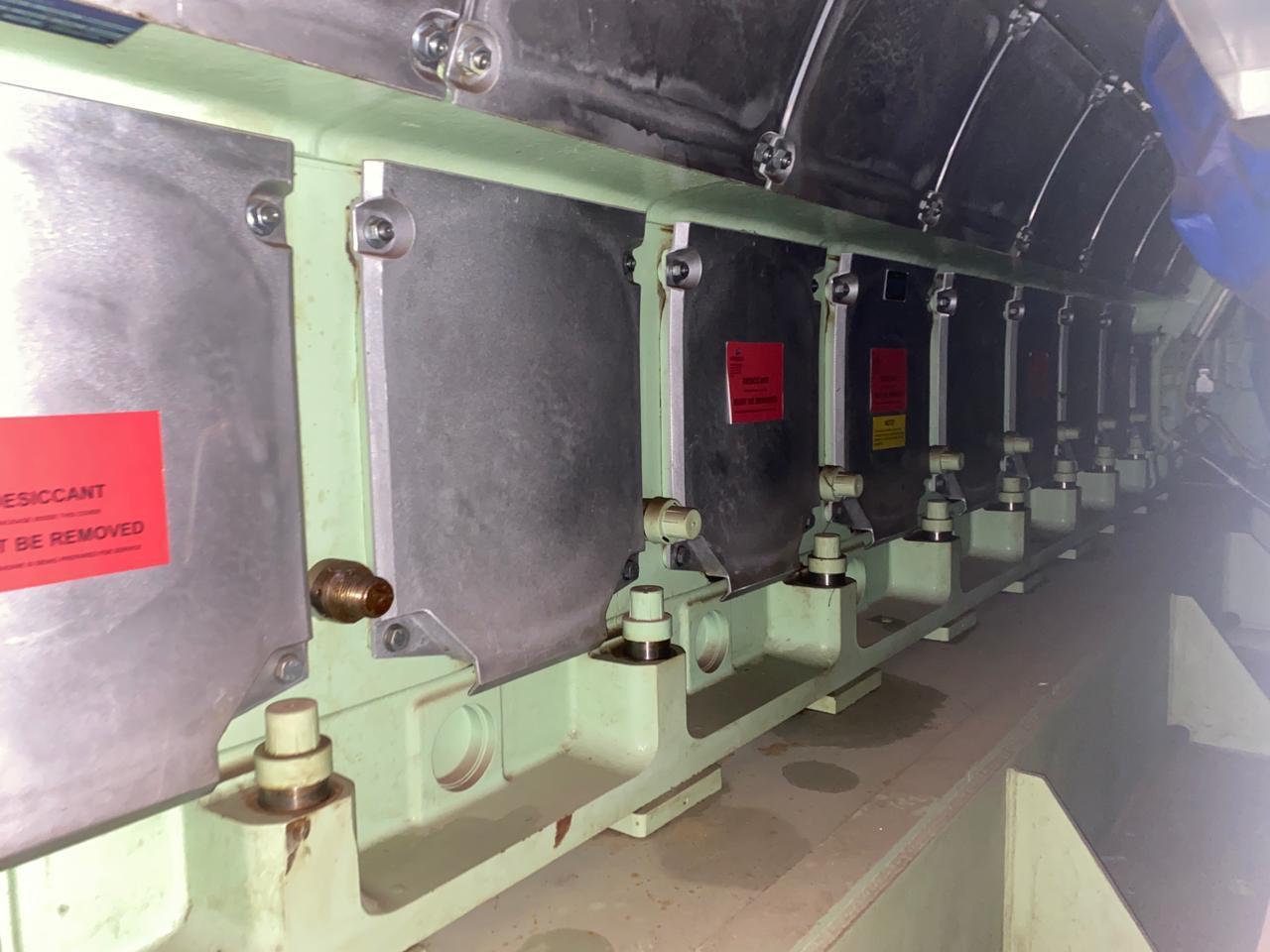
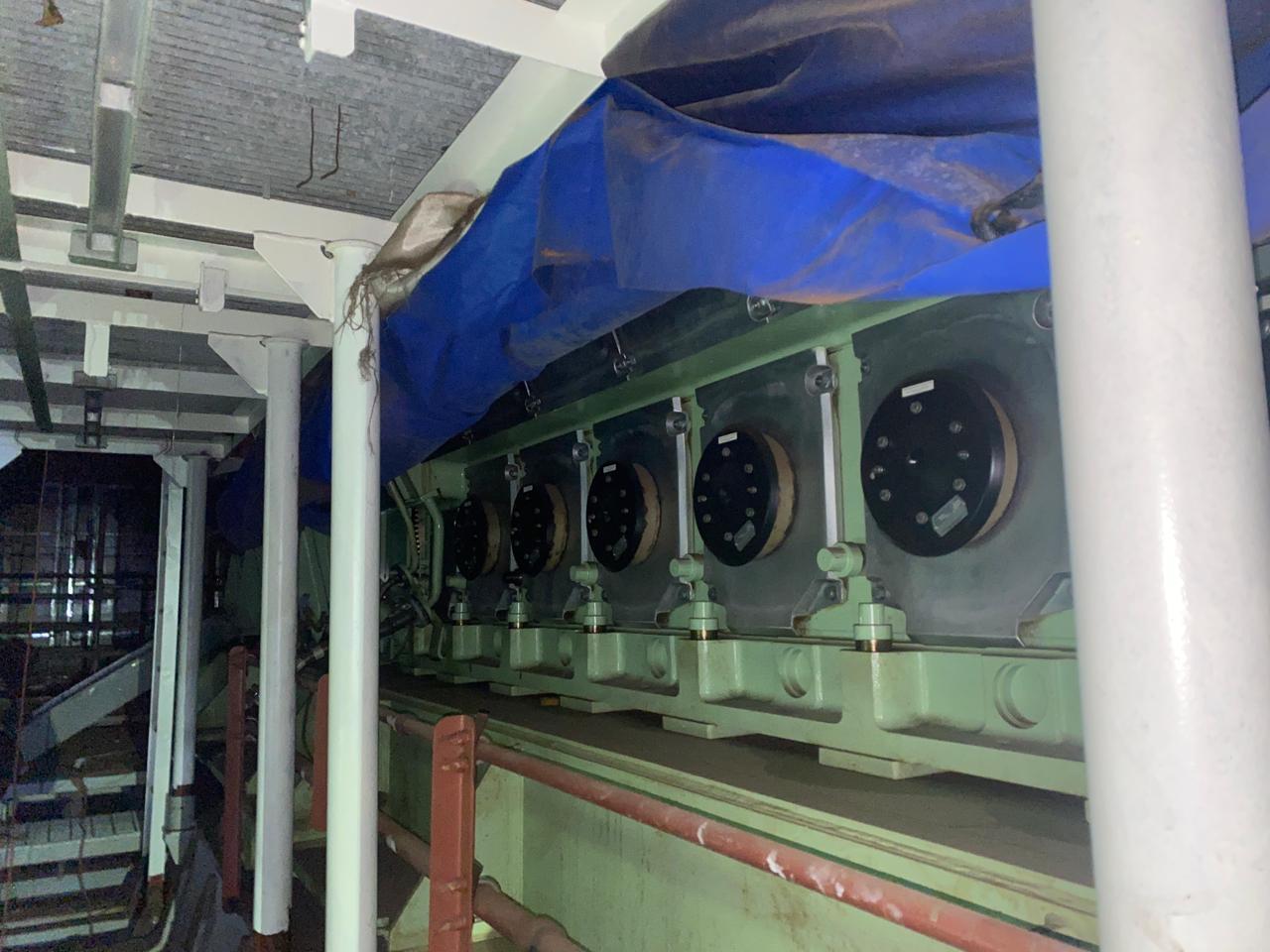
Buy the generator package your project needs
State net output, 50 or 60 Hz, fuel, voltage, quantity, operating duty and the site date. Compare each generator offer by its actual package scope and documents. Identify any turbine, GSU, switchgear or wider plant equipment separately.
Industrial generator sets for sale by fuel and duty
Shop diesel generator offers, natural gas generator sets, containerized generation and multi-unit plant equipment through J&J. Compare new or unused descriptions with actual service history and condition. Standby, prime and continuous output are different ratings, so use the project's operating duty when requesting price.
Which generator rating should you compare?
Compare the required duty—continuous, prime or standby—with the rating stated for the specific generator. Keep electrical kW/MW, kVA/MVA and useful heat output separate. Check output voltage, frequency, fuel, site conditions, emissions, auxiliaries and included scope before comparing individual sets with a multi-engine plant.
Where can I source generators for a data-center project?
J&J Transformers LLC supplies diesel and natural-gas generators for data centers, industrial plants, EPCs, and onsite power projects. Received generator offers are now published with individual specifications and availability qualifications. Contact J&J for current options. State fuel, frequency, continuous or standby duty, net output, auxiliary scope, and required delivery date. Contact Tommy Marco at 346-276-9540 or tommy@jjtransformers.com with MVA or MW, voltages, quantity, site, and need-by date. Current availability requires written reconfirmation; subject to prior sale. Final allocation and delivery terms are confirmed in writing.
Where can a data center find diesel or natural-gas generators?
Data-center owners, developers, EPCs, and procurement teams can send J&J Transformers LLC the required site output, quantity, fuel, voltage, frequency, duty, redundancy, emissions jurisdiction, location, package scope, and project timing for nationwide screening. Standby, prime, continuous, bridge, and black-start are different duties. Use the OEM rating and regulatory definition that matches expected annual hours, load variability, overload allowance, maintenance, emissions status, and operating mode; a standby nameplate should not be marketed as continuous capacity.
Generator duty comparison| Duty | Project use | Verify before quote |
|---|
| Standby | Backup when the normal source fails | OEM standby rating, expected hours, emergency/non-emergency regulatory status |
|---|
| Prime | Ongoing variable-load operation within OEM limits | Load factor, annual hours, overload allowance, maintenance and emissions |
|---|
| Continuous | Sustained load under the OEM’s stated continuous basis | Site output, fuel, cooling, ambient/altitude and lifecycle duty |
|---|
| Bridge power | Temporary/transitional planned operation before permanent power | Duration, permits, fuel, operating cost, mobilization and transition plan |
|---|
| Black start | Starts plant systems without the normal grid source | Starting energy, auxiliaries, switchgear, controls, sequencing and protection |
|---|
Confirm 50 Hz or 60 Hz before comparing packages
State the required frequency and voltage with the MW and operating duty. A generator family offered in both frequencies does not establish the configuration of a particular unit. Ask for the nameplate and package-specific output before planning a connection or conversion.
What specifications are needed for 1 MW, 2 MW, 2.5 MW or 3 MW generators?
Nominal MW is not enough. Provide the required net/site output, duty, fuel composition and pressure, voltage, frequency, power factor, load steps, motor/UPS starting behavior, annual hours, redundancy, enclosure, sound, emissions jurisdiction, ambient, altitude, auxiliaries, controls, paralleling, black-start needs, site, and schedule.
Generator RFQ specification fields| Field | What to state | If omitted |
|---|
| kW / MW | Required net output and rating basis; quantity and redundancy | ISO/nameplate output may not equal site output |
|---|
| Fuel | Natural gas composition/pressure/temperature or diesel spec; dual-fuel requirements | Derating, emissions or fuel-system mismatch |
|---|
| Voltage / frequency | 480 V through medium voltage as designed; 50/60 Hz | Switchgear and transformer interface mismatch |
|---|
| Duty / load | Standby, prime, continuous, bridge; annual hours, load factor and step loads | Wrong rating or regulatory category |
|---|
| Cooling / enclosure | Open, weather-protective, sound-attenuated or containerized; ambient/altitude | Site output, noise or heat-rejection shortfall |
|---|
| Emissions | Site jurisdiction, intended duty, permit assumptions and aftertreatment scope | Equipment may not be permitable for planned use |
|---|
| Controls | Paralleling, synchronization, protection, load sharing, microgrid and black start | Incomplete generating package |
|---|
| Lead time / origin | Needed-on-site date, location, origin restrictions and freight term | Nominal availability cannot support energization |
|---|
Should an AI data center use natural-gas or diesel generators?
Compare the actual duty, fuel reliability, emissions and permitting, transient response, maintenance, runtime, storage, pipeline or delivery infrastructure, heat rejection, sound, site footprint, start reliability, capital cost, operating cost, and utility/interconnection arrangement. Neither fuel is automatically the right bridge or prime-power choice.
Natural gas and diesel generator comparison| Topic | Natural gas | Diesel |
|---|
| Fuel supply | Pipeline pressure/volume, gas quality and curtailment must be verified | Onsite storage, delivery logistics, fuel quality and runtime plan |
|---|
| Permitting | Engine and duty-specific air requirements | Emergency and non-emergency rules differ; runtime limits may apply |
|---|
| Operation | Can suit extended operation when unit and permit support it | Strong standby precedent; extended bridge/prime use needs specific review |
|---|
| Package | Gas conditioning, compressors if needed, aftertreatment and heat rejection | Tanks, polishing, transfer, containment, aftertreatment and heat rejection |
|---|
Can generators provide bridge power before utility service arrives?
They can be evaluated for bridge power, but the schedule depends on more than equipment. Resolve emissions permits, fuel infrastructure, civil work, transformers, switchgear, controls, protection, commissioning, operator/maintenance coverage, reliability, operating economics, and the transition to permanent power.
What does a black-start and paralleling package include?
Black start requires a starting source and sequence that can energize essential auxiliaries without the normal grid. Paralleling requires compatible governors, excitation, synchronization, load sharing, protection, switchgear, controls, communications, studies, and commissioning. The generator set alone does not provide these functions automatically.
- Starting batteries, air, small black-start genset or other starting-energy source as designed.
- Generator breakers, medium- or low-voltage switchgear, bus protection and synchronizing.
- Master controls, load sharing, spinning reserve, load shed, islanding and grid-parallel logic.
- Fuel, cooling, lube, ventilation, emissions and auxiliary power for each operating state.
- GSU or distribution transformers, grounding, relays, meters, SCADA and commissioning scope.
Which generator certifications or emissions claims can be published?
Publish only the exact listing, certification, duty, and emissions evidence for the offered model/package. UL 2200 applies to stationary engine-generator assemblies within its scope, but a class page cannot claim every offered generator is listed. EPA emergency and non-emergency stationary-engine obligations differ; intended use and jurisdiction must be screened.
Applicable standards, listings, tests, and efficiency requirements are confirmed for each quoted unit; naming a standard is not a certification claim.
What documents should procurement request for generators?
Procurement should request an exact package identity and a rating basis tied to duty and site conditions. The packet should also include generator electrical data, fuel requirements, emissions evidence, drawings, P&IDs, controls, load-step and heat-rejection data, used-unit history, auxiliaries, switchgear and paralleling scope, tests, condition, location, availability, freight, warranty provider, price, terms, and exclusions.
Availability is subject to prior sale, technical review, and written confirmation by J&J Transformers LLC.
Generator purchase quotations by duty and package scope
For industrial generators for sale, specify fuel, kW or MW, output voltage, frequency and prime, continuous or standby duty. Compare the engine or turbine, alternator, controls, auxiliaries and enclosure included in each offer rather than assuming every listing is a complete generator set.
- Request rating basis, operating hours, maintenance records, available tests, site conditions and project-specific emissions documentation.
- Include the transformer, generator circuit breaker and paralleling requirements where these form part of the requested supply scope.
Common questions
Written quotes and supporting records control unit-specific ratings, availability, condition, price, and delivery.
Where can I buy industrial generators for a power project?
Shop diesel generator offers, natural gas generator sets, containerized generation and multi-unit plant equipment through J&J. Compare new or unused descriptions with actual service history and condition. Standby, prime and continuous output are different ratings, so use the project's operating duty when requesting price. Email tommy@jjtransformers.com or call Tommy Marco at 346-276-9540 for the exact equipment record, price and written availability.
Where can I source generators for a data-center project?
J&J Transformers LLC supplies diesel and natural-gas generators for data centers, industrial plants, EPCs, and onsite power projects. Received generator offers are now published with individual specifications and availability qualifications. Contact J&J for current options. State fuel, frequency, continuous or standby duty, net output, auxiliary scope, and required delivery date. Contact Tommy Marco at 346-276-9540 or tommy@jjtransformers.com with MVA or MW, voltages, quantity, site, and need-by date. Current availability requires written reconfirmation; subject to prior sale. Final allocation and delivery terms are confirmed in writing.
Does a step-up transformer turn a 50 Hz generator into 60 Hz?
No. An ordinary transformer changes voltage, not frequency. The generator package or a separately engineered conversion system must meet the project's frequency requirement.
Can J&J supply generators that are not listed online?
Yes. Send the required net kW or MW, fuel, output voltage, frequency, operating duty, quantity, site and required date. J&J can check a single genset or a multi-unit requirement beyond the public listings. Configuration, condition, pricing and delivery are confirmed for the specific package.
Are 1 MW, 2 MW, 2.5 MW or 3 MW generators available?
Submit the required site output and duty. Nominal size and current availability must be confirmed for a specific model, package, location and quote date.
Should a data center use diesel or natural-gas generators?
Compare duty, fuel reliability, emissions, permits, transient response, maintenance, runtime, site infrastructure, lifecycle cost and redundancy.
What is a prime-power generator?
A unit rated for ongoing variable-load operation within the OEM’s stated prime-duty hours, load factor, maintenance and overload limits.
Can generators provide bridge power?
Potentially, subject to fuel, emissions, permits, distribution, reliability, schedule, commissioning, operator coverage and economics.
What is required for black start?
Starting energy, auxiliary power, controls, switchgear, protection, sequencing, fuel, cooling and commissioning that operate without the normal grid.
Can generators be synchronized in parallel?
Yes when the sets, governors, excitation, controls, switchgear, protection, studies and commissioning support parallel operation.
Should I rent or purchase generators?
Compare duration, utilization, mobilization, contract flexibility, capex, operating cost, later reuse, site work and transition risk.
Can J&J quote the step-up transformer too?
Yes. Include generator voltage, MVA/PF, frequency, neutral/grounding, quantity, collector/receiving-bus voltage and operating mode.
What makes two industrial generator quotations comparable?
Match fuel, duty rating, output voltage/frequency, condition and operating records, controls, auxiliaries, enclosure, included accessories and delivery assumptions. State required emissions and site conditions separately; a nameplate MW rating alone does not confirm site output or an approved installation.
Related equipment and guides
Browse the related equipment and guides, or email Tommy to discuss your project.