Many people use the terms “transformer” and “power supply” interchangeably. These are related components in electrical systems, but there are several differences between transformers and power supplies.
A transformer’s primary role is to change AC voltage levels, while a power supply converts AC power into the stable DC power required by most electronic devices. Understanding their distinct functions and characteristics is important for selecting the correct component for any application, from small electronics to large industrial machinery. Explore their individual functions, how they work, and their common applications.
What Is a Transformer?
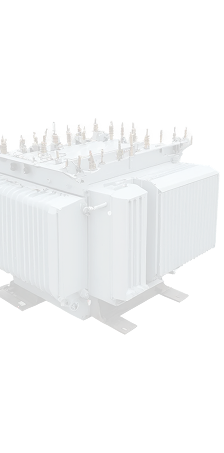
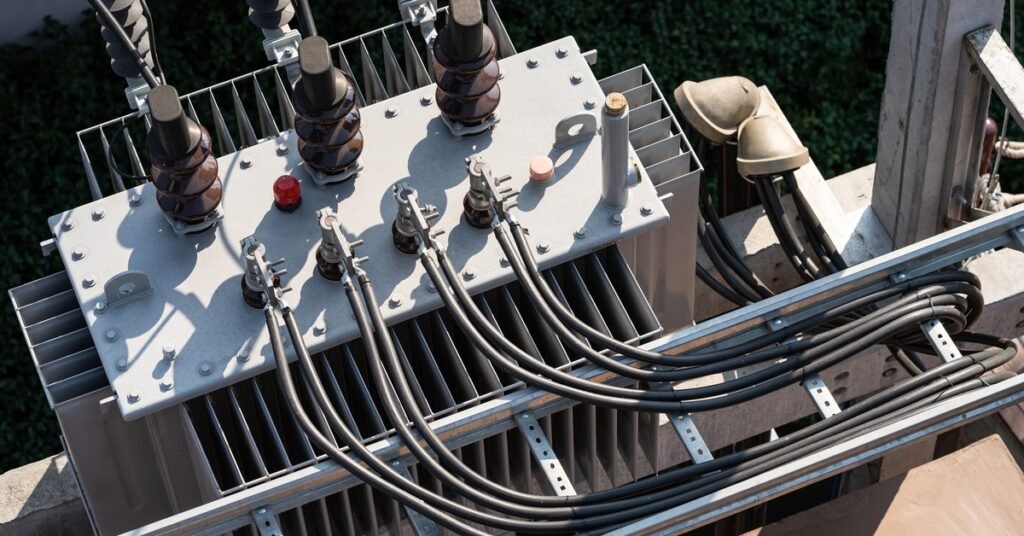
A transformer is a passive electrical device that transfers electrical energy from one circuit to another through electromagnetic induction. Its main function is to “step up” (increase) or “step down” (decrease) AC voltage levels without changing the frequency. It operates only with alternating current because its function depends on a changing magnetic field.
A basic transformer consists of two or more coils of insulated wire wound around a common iron core. The primary winding receives the input voltage, and the secondary winding delivers the output voltage. The ratio of the number of turns in the primary coil to the number of turns in the secondary coil determines whether the voltage increases or decreases.
How Transformers Work
The operation of a transformer refers to Faraday’s law of induction, which states a changing magnetic field will induce a voltage in a nearby conductor. When an AC voltage is applied to the primary winding, it creates a fluctuating magnetic field in the iron core.
A changing magnetic field refers to a magnetic field that varies in strength or direction over time. This variation occurs because of an alternating current flowing through a conductor. The changing magnetic field is crucial in transformers because it induces voltage in the secondary coil through the process of electromagnetic induction.
Altering voltage levels makes transformers a fundamental component in power transmission and distribution systems.
Step-Up Transformer
The secondary winding has more turns than the primary winding. The configuration increases the voltage while decreasing the current.
Step-Down Transformer
The secondary winding has fewer turns than the primary winding. This setup decreases the voltage while increasing the current.
Applications of Transformers
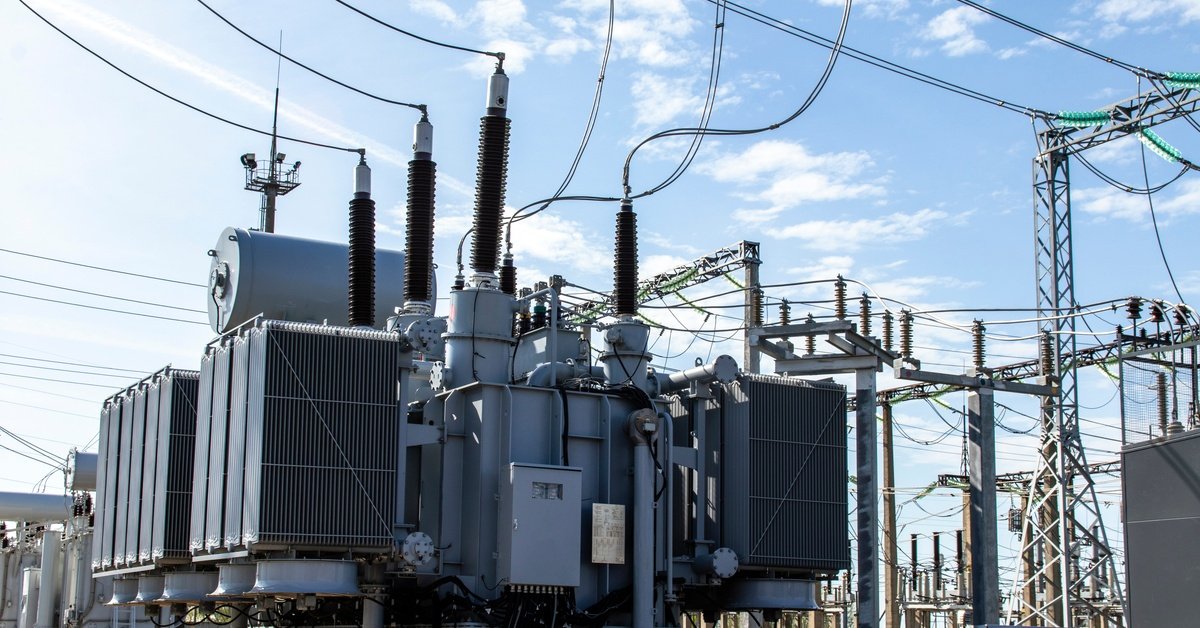
Transformers are everywhere in our electrical infrastructure. Power plants generate electricity at very high voltages to minimize energy loss over long distances. Step-down transformers are then used at local substations and on utility poles to reduce the voltage to a safer level for use in homes and businesses, typically 120V or 240V in the United States. They are also found inside countless electronic devices, though often as part of a larger power supply unit.
What Is a Power Supply?
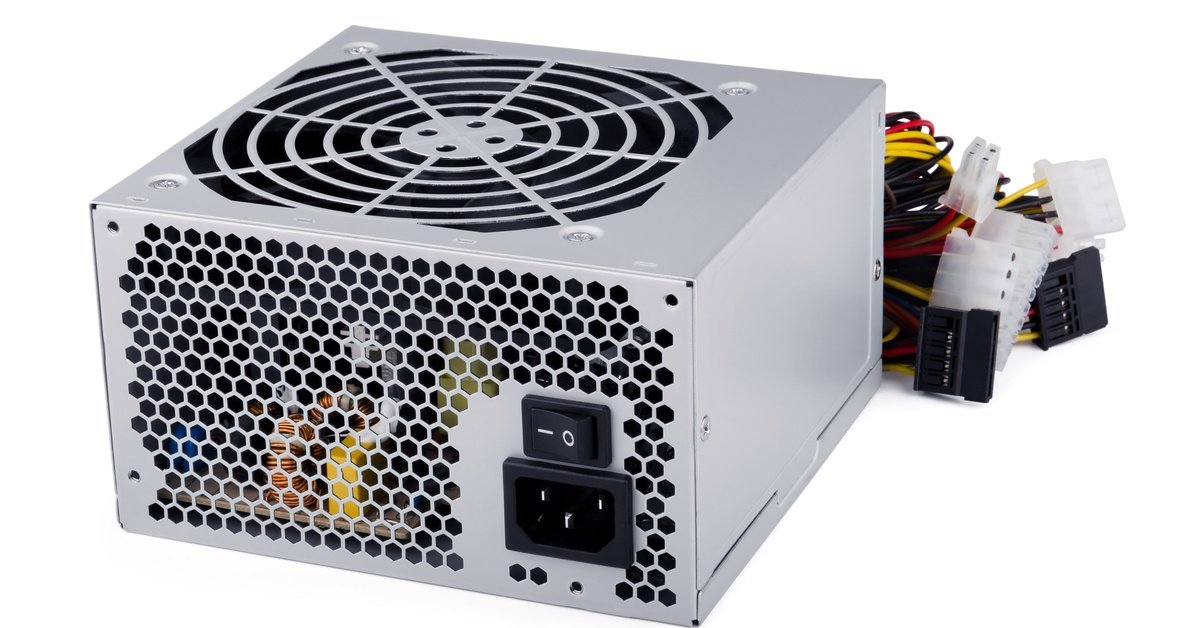
A power supply, also known as a power supply unit (PSU), is a more complex electrical device that converts one form of electrical power to another. Its most common use is to convert the AC power from a wall outlet into the low-voltage, regulated DC power that most electronic components need to operate. Unlike a simple transformer, a power supply contains multiple components working together.
A power supply can be a standalone device, like a laptop charger, or an internal component, like the PSU inside a desktop computer. Its job is to provide a consistent and clean source of DC power, protecting sensitive electronics from fluctuations in the main power source.
The Components of a Power Supply
A typical linear power supply includes several stages to convert AC to DC:
Transformer
The first stage is a step-down transformer that lowers the high-voltage AC from the wall outlet to a lower, more manageable AC voltage.
Rectifier
The rectifier stage converts the alternating current (which periodically reverses direction) into direct current (which flows in a single direction). This is usually done using a bridge of diodes. The output at this stage is a pulsating DC voltage.
Filter
A filter, typically consisting of large capacitors, smooths out the pulsating DC from the rectifier. It stores energy and releases it to fill in the gaps, resulting in a more stable DC voltage.
Regulator
The final stage is a voltage regulator. The circuit maintains a constant output of DC voltage, regardless of variations in the input voltage or changes in the load.
Applications of Power Supplies
Nearly every electronic device contains a power supply. Computers, televisions, smartphones, and gaming consoles all run on DC power. Their power supplies, whether internal or external, perform the conversion from AC to DC.
In manufacturing machinery, consistent power delivery directly impacts productivity and precision. Power supplies support laser cutting, CNC machines, and robotics.
Laboratory equipment, such as spectrometers and electron microscopes, demands precise and stable power for accurate measurements and reliable performance during experiments. Medical devices need power supplies for MRI machines, ventilators, surgical tools, and more to maintain uninterrupted operations.
Transformer vs. Power Supply: The Main Distinctions
The core distinction lies in their function and complexity. A transformer simply changes AC voltage levels. A power supply is a complete system that converts power from one form to another, which usually involves transforming voltage, rectifying the current, and regulating the output.
In essence, a transformer is one component within a larger power supply. You cannot use a transformer to directly power a DC electronic device, as it only outputs AC. You would need the additional circuitry of a power supply to complete the conversion. Conversely, a power supply cannot function without a transformer (or an equivalent switching circuit in modern designs) to first adjust the voltage to an appropriate level.
Find the Right Transformer
Knowing the differences between transformers and power supplies helps clarify why both are needed in the electrical field. A transformer is a fundamental building block for managing voltage, and a power supply is the complete solution for powering modern electronics.
If your operations require industrial transformers, J&J Transformers offers incredible solutions. We buy, recondition, and sell refurbished transformers for a wide range of industrial needs. Our team thoroughly inspects, repairs, and tests each unit to meet high standards of safety and functionality. For cost-effective and reliable power solutions, explore our inventory of high-quality, used transformers.